
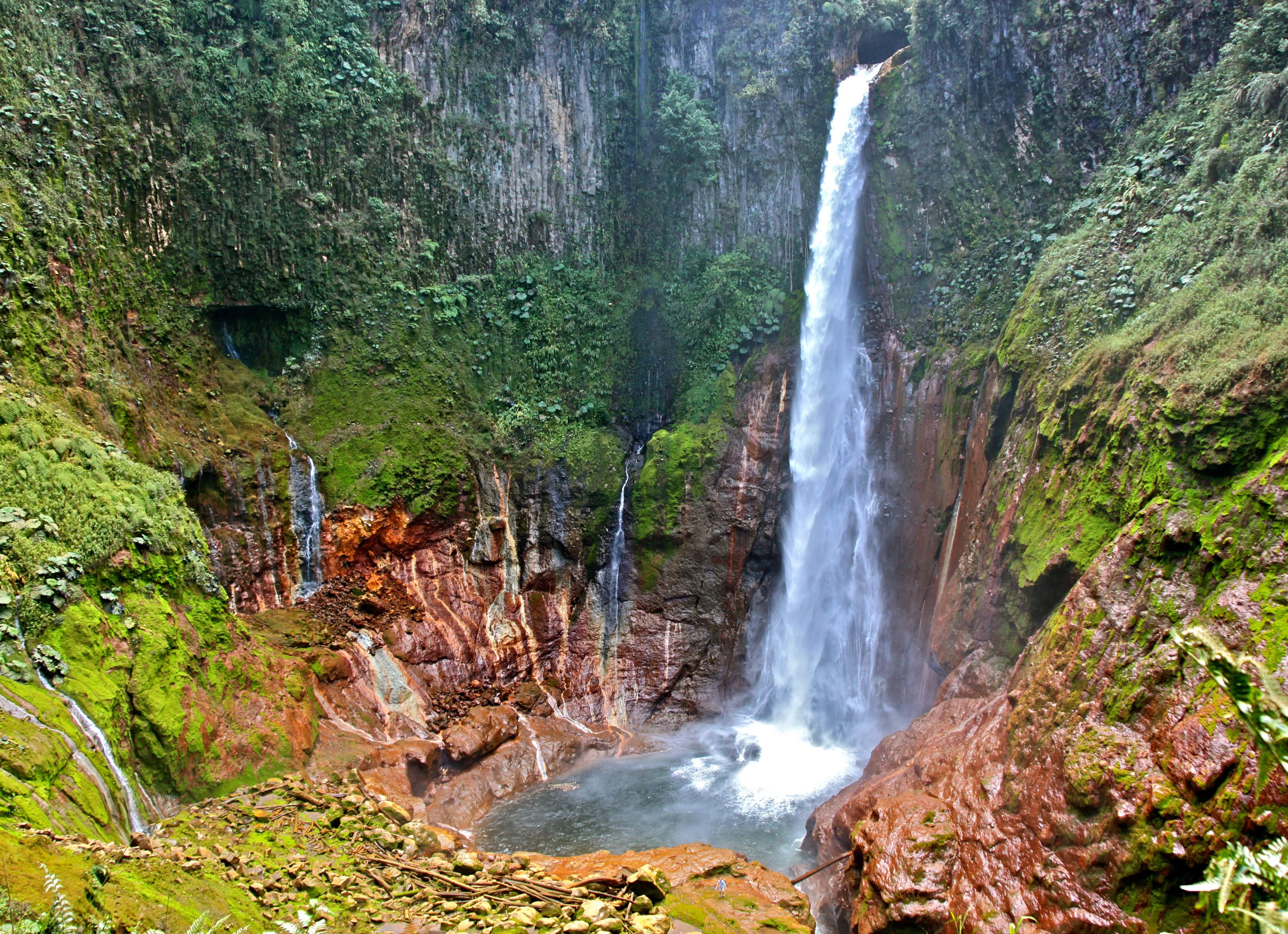
You hear it before you see it. A deep, rolling thunder that gets louder as the trail descends through cloud forest. Then the trees open and there it is: a single column of white water dropping 90 meters straight down into a crater so ancient and green it doesn't look real.
Catarata del Toro is not just one of the tallest waterfalls in Costa Rica, it's one of the most dramatic. The combination of height, the volcanic crater setting, the cloud forest surroundings, and the ease of access makes it the kind of place that most visitors call the single best thing they saw in the country.
This guide covers everything you need to plan your visit: the trail, the viewpoints, the hummingbird garden, the Blue Falls combo ticket, how to get there, and what most guides won't tell you.
Quick Facts
- Location
- Bajos del Toro, Alajuela Province
- Distance
- ~25-30 min from Venecia · ~1.5 hr from La Fortuna · ~2 hr from San José
- Difficulty
- ModerateEasy to moderate, well-maintained trail with ~350 steep stairs down to the base. Going down is fine; climbing back up is the workout.
- Best Time to Visit
- Dry season (December–April). Arrive at 7:00 AM opening for fewest people and best light.
Getting There
Approach from the north on Route 708, whether from La Fortuna, Venecia, or Ciudad Quesada. The road is paved, scenic, and manageable in any vehicle.
From La Fortuna: Head toward Ciudad Quesada, then south through Zarcero and onto Route 708. About 1.5 hours.
From San José: Take the Interamericana Norte toward Naranjo, continue through Zarcero, then Route 708 south. About 2 hours.
Do NOT approach from the south via Sarchí. That road is steep, narrow, full of potholes, and often shrouded in cloud.
No 4WD needed, a standard rental car is fine in any season. The access road is paved.
What to Expect
The property has two color-coded trails: the White signs lead to the Ruta Catarata (Waterfall Trail) with four viewpoints and the base, while Green signs mark the Ruta Jardín (Garden Trail) that loops through forest and hummingbird garden.
Do the waterfall trail first (white signs), then return via the garden trail (green signs). This gives you the dramatic descent first while your legs are fresh.
Viewpoint 1 (El Toro) is the highest vantage point, you look down into the entire volcanic crater. Viewpoint 2 (El Palomar) puts you level with the top of the waterfall. Viewpoint 3 (La Vistada) brings you closer. Viewpoint 4 (The Base) is where you stand looking straight up at 90 meters of falling water.
The stairs: 350+ steps down (20-30 minutes), mostly concrete. Coming back up takes 30-40 minutes. Walking sticks are available to borrow at the entrance.
After the hike, sit at the open-air restaurant and watch the hummingbird feeders. Multiple species buzz around your head. Blue morpho butterflies drift through. The garden trail is especially beautiful on misty mornings.
What This Is Not
It's not a swimming waterfall. The current at the base is too strong. If you want to swim, buy the combo ticket and go to Blue Falls afterward.
The restaurant is basic, coffee, juices, snacks, and simple meals. Bring your own food if you want a proper lunch.
The bottom stairs can be intimidating for some. If you have vertigo or serious knee issues, viewpoints 1 and 2 give spectacular views without any stairs.
Cell service is limited. Download your maps offline before arriving.
Tips from a Local
Frequently Asked Questions
How much does it cost to visit Catarata del Toro?
Entrance is $15 to $25 per person. The best value is the combo ticket with nearby Blue Falls for $25, which covers both attractions. You can pay in cash (US dollars, euros, or colones) or by credit/debit card.
How many steps are there at Catarata del Toro and how hard is the hike?
There are 350+ steps, mostly concrete, down to the base of the waterfall, taking about 20 to 30 minutes to descend and 30 to 40 minutes to climb back up. The overall difficulty is moderate. If you have vertigo or serious knee issues, viewpoints 1 and 2 give spectacular views without any stairs, and walking sticks are available to borrow at the entrance.
How long do you need to visit Catarata del Toro?
Plan on about 1.5 to 2 hours for the full visit. The property is a roughly 3.5 km (2.2 mile) loop with two color-coded trails: the White signs lead to the waterfall trail with four viewpoints and the base, and the Green signs mark the garden trail through the forest and hummingbird garden. Doing the waterfall trail first, while your legs are fresh, is recommended.
How do you get to Catarata del Toro and do you need a 4WD?
No 4WD is needed; the access road is paved and a standard rental car is fine in any season. Approach from the north on Route 708, whether coming from La Fortuna (about 1.5 hours) or San José (about 2 hours via the Interamericana Norte through Naranjo and Zarcero). Do not approach from the south via Sarchí, as that road is steep, narrow, full of potholes, and often shrouded in cloud.
Can you swim at Catarata del Toro?
No, Catarata del Toro is not a swimming waterfall, because the current at the base is too strong. If you want to swim, buy the combo ticket and head to nearby Blue Falls afterward, where getting in the water is the whole point.
What makes Catarata del Toro special, and how tall is it?
Catarata del Toro is a single column of white water dropping 90 meters straight down into an extinct volcanic crater, making it one of the tallest and most dramatic waterfalls in Costa Rica. From viewpoint 1 (El Toro), the highest vantage point, you look down into the entire volcanic crater, while viewpoint 4 (The Base) puts you standing at the bottom looking straight up at 90 meters of falling water. The combination of height, the crater setting, and the surrounding cloud forest is what makes many visitors call it the best thing they saw in the country.
When is the best time to visit Catarata del Toro and what should you bring?
The best time is the dry season, December through April, and arriving at the 7:00 AM opening means the fewest people and the best light. Bring shoes with traction (no flip-flops), a rain jacket, water (500ml to 1L), a camera with waterproof protection, light layers, sunscreen, and cash as backup. Note that cell service is limited, so download your maps offline before arriving.
Where to Eat
• La Terraza del Café de Bajos del Toro: An excellent restaurant with traditional food and specializes in having great coffee, light bites and scenic views, perfect for a post-hike snack, lunch or even breakfast before heading out.
• Restaurante-Bar Toro Amarillo: Classic local joint with friendly service and a varied menu. Solid option for lunch or dinner in town.
• Restaurante Blue Morpho: Highly rated place near the plaza offering local dishes with great reviews from visitors.
• Kafecitos Soda Restaurante y Supermercado: More casual soda-style spot where you can grab coffee, snacks, traditional fare and drinks. Good for a relaxed meal or pickup.
Where to Stay
Luxury: El Silencio Lodge & Spa, Relais & Châteaux property with private cabins, 500 acres of private forest reserve, spa, and fine dining.
Mid-Range: Several family-run cabin rentals on AIrbnb in the area, with comfortable amenities, hot water, and mountain views. From $80-$150/night.
Budget: Camping available at Tesoro Escondido and Paraíso Manantiales.
Strategic alternative base: Venecia (30-40 min north), More lodging options, more restaurants, and easy access to ATV tours, canyoning, hot springs, and Laguna de Hule. On a main road. 1 hour away from La Fortuna for future day plans.
Good to Know
- Cell Service
- Kolbi works; other carriers spotty or none
- Payment
- Cash (USD, EUR, or colones) or credit/debit card
- Accessibility
- Not wheelchair accessible. Reaching the base means descending roughly 350–500 steep concrete stairs, with a strenuous climb back up. Visitors with mobility limits can still enjoy the hummingbird gardens and upper viewpoints, which need no stairs.
- What to Bring
- Shoes with traction (no flip-flops), rain jacket, water (500ml-1L), camera with waterproof protection, light layers, sunscreen, cash as backup
- Meeting Point
- Parking lot entrance, free, guarded lot
Continue Exploring
More guides and resources to help you plan your trip
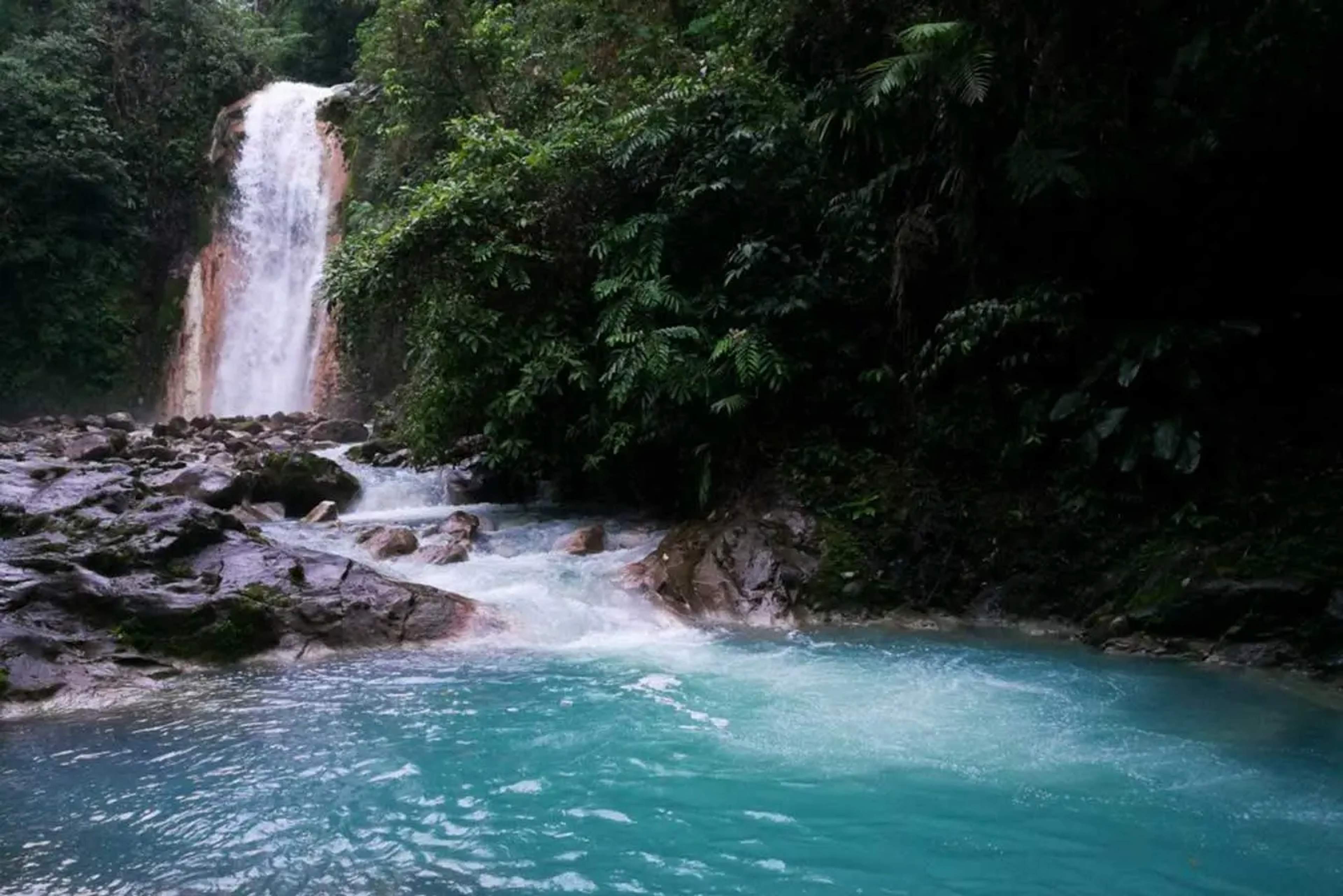 Area Guide
The Complete Guide to Bajos del Toro
Everything you need to plan your trip to the waterfall capital of Costa Rica. Every waterfall worth seeing, how to get there, where to eat and sleep, and how to build the perfect 2-3 day itinerary.
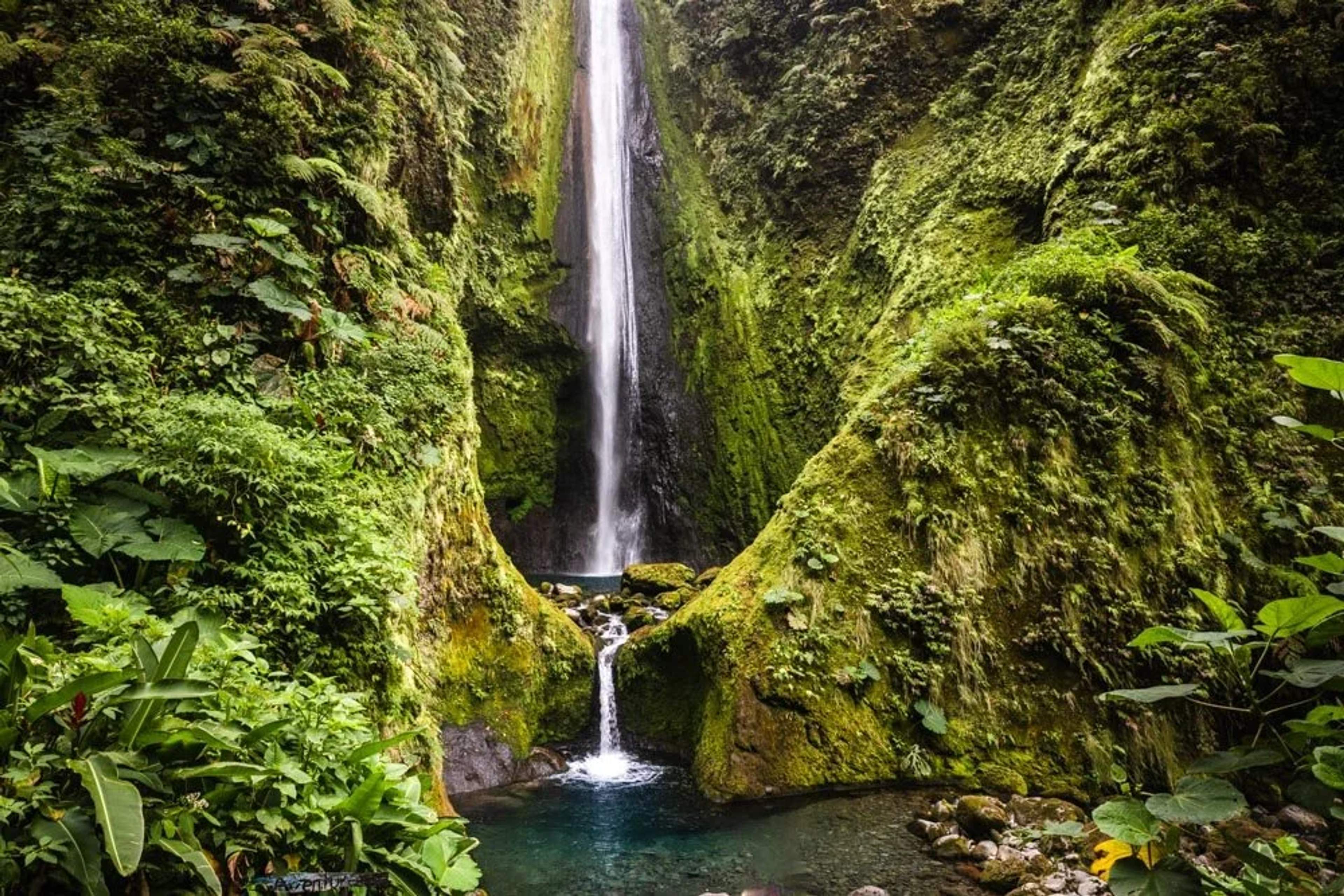 Hiking
Vuelta del Cañón: Bajos del Toro's Most Rewarding Hike
An 11 km jungle trek to a two-tier waterfall with a turquoise pool inside a canyon you'll have entirely to yourself.
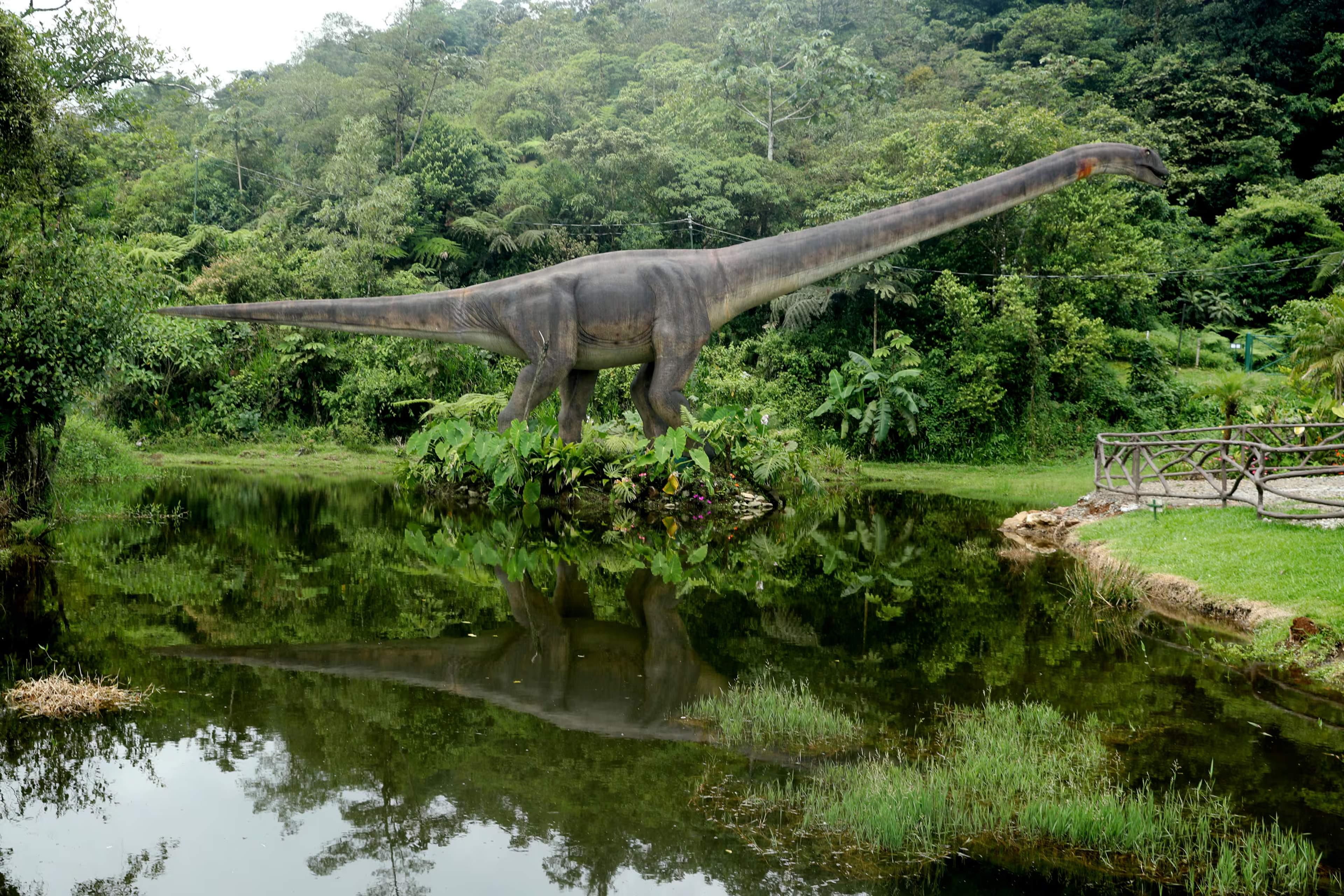 Waterfall
Río Agrio, Pozas Celestes & Dino Land: The Complete Guide
A 50-meter volcanic waterfall, naturally blue swimming pools, and life-sized mechanical dinosaurs, all on one property.
 Waterfall
Jurassic Canyon: The Most Spectacular Hidden Place in Costa Rica
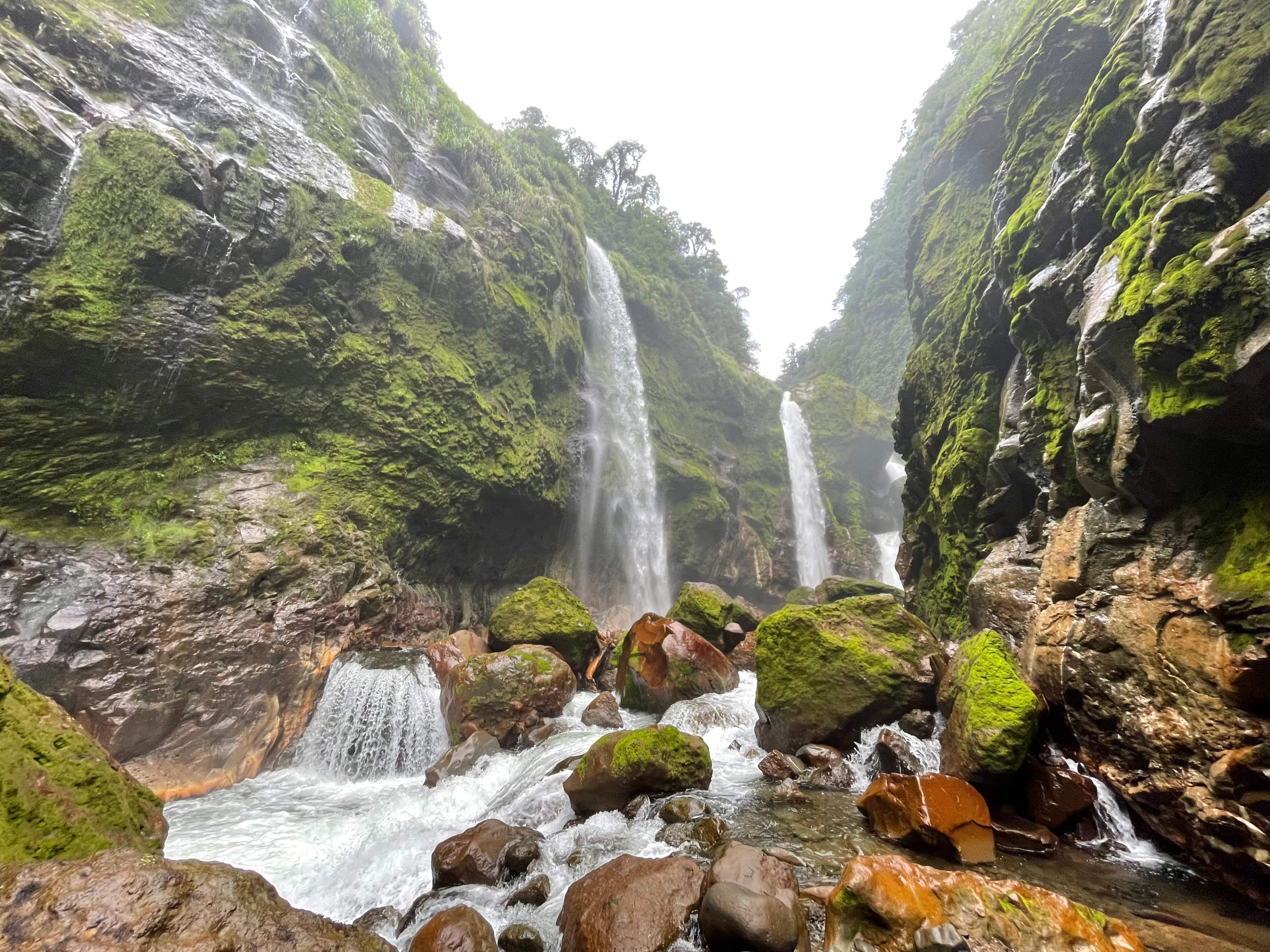
A Complete Guide to Quebrada Gata & Barroso Waterfall in Bajos del Toro
 Waterfall
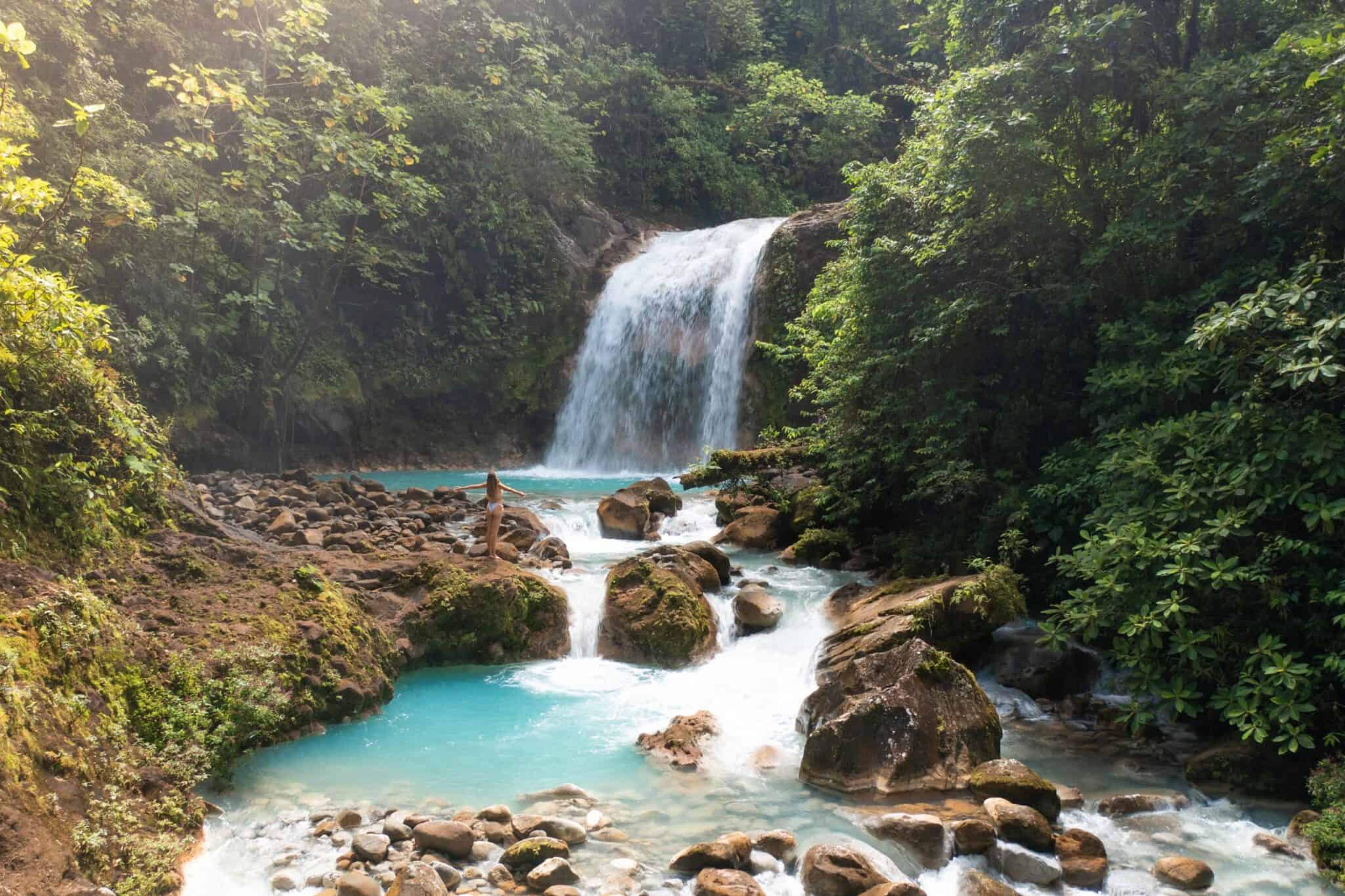
Blue Falls of Costa Rica
Six turquoise waterfalls with swimming pools on a 126-acre private reserve. The water color isn't photoshopped, it's even more vivid in person.
 Blog
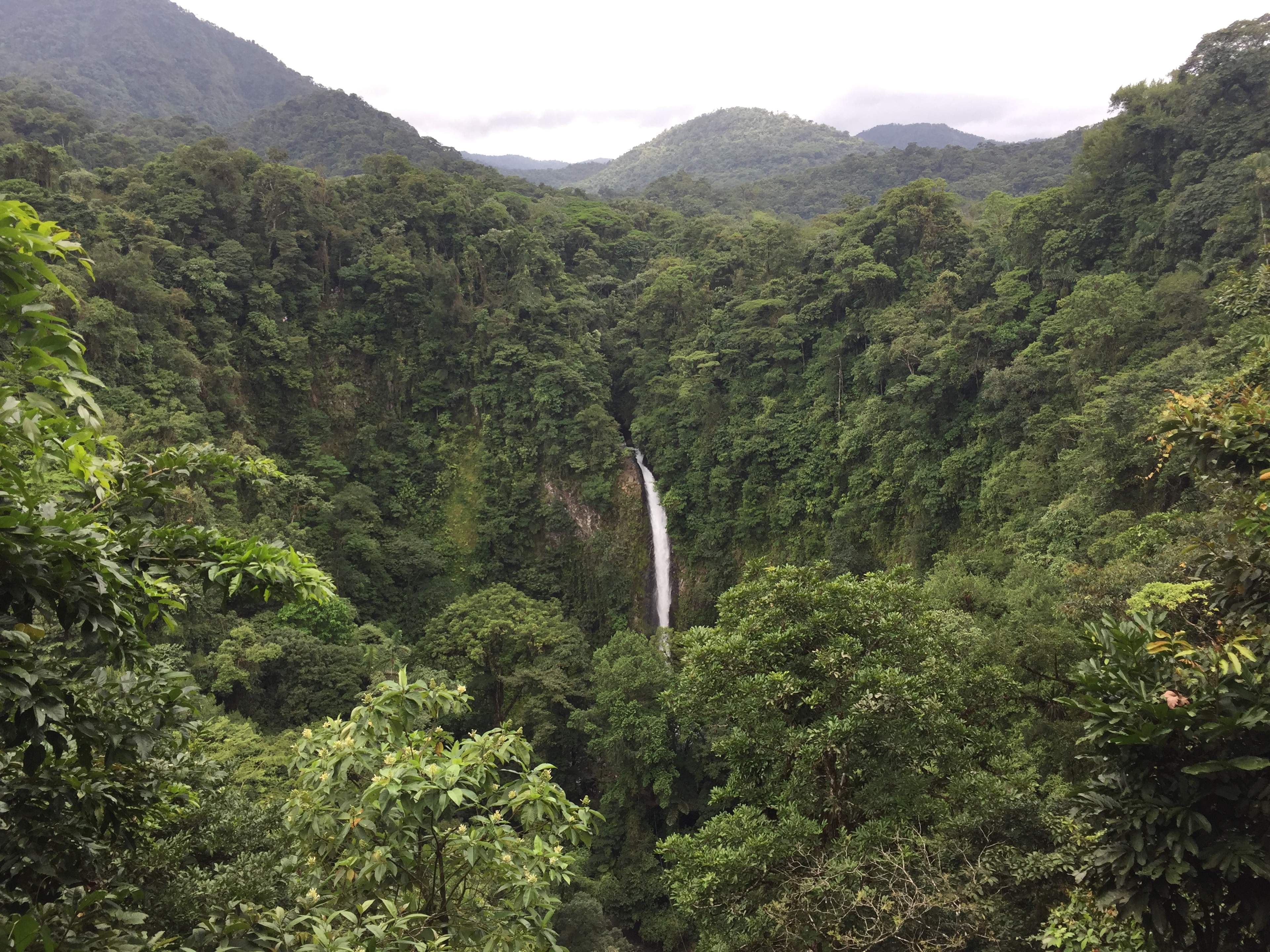
BlogBajos del Toro vs La Fortuna: Which Should You Visit?
Two volcanic regions. One famous, one hidden. Here's how they compare, and why the real answer is "both."