
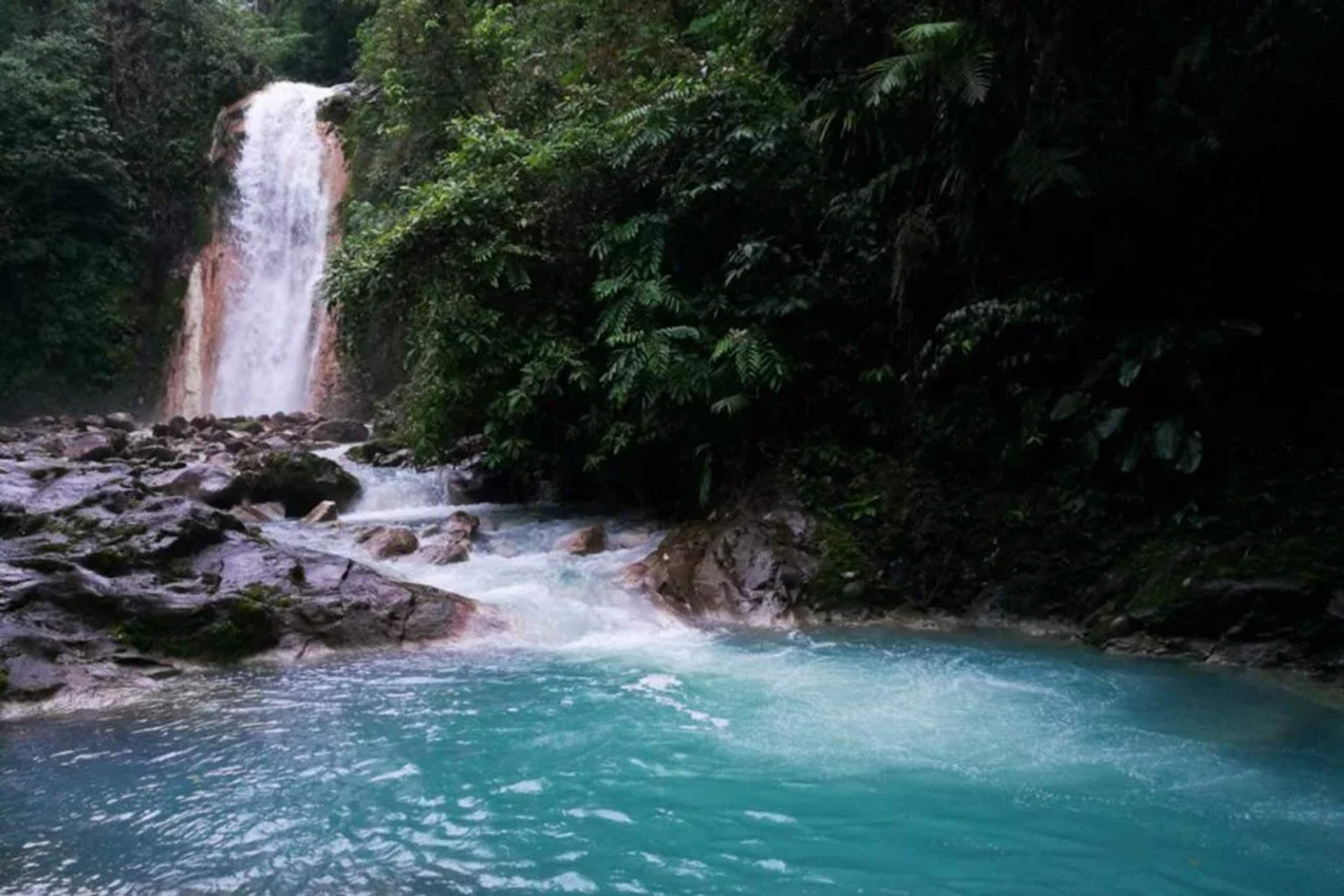
Costa Rica has more waterfalls per square kilometer than almost anywhere on Earth. The combination of volcanic terrain, tropical rainfall, and elevation changes from sea level to 3,800 meters means that water is constantly falling off things, cliffs, craters, canyon walls, cloud forest ridges. Some estimates put the total at over 1,000 waterfalls nationwide. Most tourists see one, maybe two.
This guide covers the 20 we think are most worth your time, organized not by Instagram fame but by the quality of the actual experience, how the waterfall makes you feel when you're standing in front of it, whether you can swim, how crowded it is, and whether the effort to get there matches what you find. We've included the famous ones (you should see La Fortuna and Río Celeste) alongside waterfalls that receive almost zero foreign visitors but rival anything in the tourist corridor.
About 40% of this list is in the Bajos del Toro cloud forest region between San José and La Fortuna, an area most travelers drive right past. That's not a coincidence. It's the densest concentration of accessible, swimmable, uncrowded waterfalls in the country, and it's the region we know best.
Quick Reference Table
| # | Waterfall | Region | Height | Swimming | Difficulty | Crowd Level | Entrance Fee |
|---|---|---|---|---|---|---|---|
| 1 | Catarata del Toro | Bajos del Toro | 90m | ❌ | Easy-Moderate | Low | $15 |
| 2 | La Fortuna | Arenal | 70m | ✅ | Moderate | High | $18 |
| 3 | Río Celeste | Tenorio | 30m | ❌ | Moderate | High | $12 |
| 4 | Blue Falls (Las Gemelas) | Bajos del Toro | 15-25m | ✅ | Moderate | Low | $17-20 |
| 5 | Nauyaca | Dominical | 45m + 20m | ✅ | Moderate-Hard | Medium | $10-12 |
| 6 | Llanos de Cortés | Guanacaste | 12m | ✅ | Easy | Medium | Free, $3 |
| 7 | Jurassic Canyon | Bajos del Toro | 15-20m | ✅ | Hard | Very Low | ~$5 |
| 8 | La Leona | Guanacaste | Various | ✅ | Hard (guided) | Low | $65-85 tour |
| 9 | Tesoro Escondido | Bajos del Toro | 40m | ✅ | Moderate-Hard | Very Low | ~$5 |
| 10 | Montezuma | Nicoya | 24m + 12m | ✅ | Easy-Moderate | Medium | Free |
| 11 | La Paz Waterfall Gardens | Central Valley | Various | ❌ | Easy | High | $48 |
| 12 | Río Agrio | Bajos del Toro | 15m | ✅ | Easy | Low | ~$3-5 |
| 13 | Poza Azul (Blue Falls) | Bajos del Toro | Pool | ✅ | Moderate | Low | Incl. w/ Blue Falls |
| 14 | La Celestial (Blue Falls) | Bajos del Toro | 10-12m | ✅ | Moderate | Low | Incl. w/ Blue Falls |
| 15 | Bajos del Toro (village fall) | Bajos del Toro | 30m | Limited | Easy | Very Low | Free |
| 16 | Savegre | Central Pacific | 25m | ✅ | Easy-Moderate | Low | $8-10 |
| 17 | Catarata Vuelta del Cañón | Bajos del Toro | 25m | ✅ | Hard | Very Low | ~$5 |
| 18 | San Luis | Monteverde | 20m | ✅ | Moderate | Very Low | $5-8 |
| 19 | Diamante | Drake Bay | 55m | ❌ | Hard | Very Low | Free |
| 20 | Juanilama | San Carlos | 20m | ✅ | Moderate | Very Low | ~$3 |
Prices and heights are approximate. See individual sections for details and things to verify.
The Famous Five
These are the waterfalls that appear in every Costa Rica guide, and for good reason, they're spectacular. But knowing what to expect (and when to go) makes the difference between a magical experience and a frustrating one.
1. Catarata del Toro, Bajos del Toro
The one that falls into a volcanic crater.
A single column of water dropping 90 meters into an extinct volcanic crater carpeted in ferns, moss, and volcanic rock streaked with iron reds and oranges. The setting is unlike anything else in Costa Rica, it looks prehistoric, like the waterfall has been falling since before humans existed. Because it probably has.
The trail descends 350+ steps through cloud forest to the base, where the scale hits you. You're standing inside a crater with sheer walls on all sides and a waterfall thundering above. The hummingbird garden at the top is a major attraction in its own right, dozens of species feeding from flowers and feeders just meters from your face.
What most guides won't tell you: The upper viewpoints are genuinely spectacular. If you can't handle the stairs, you don't need to descend to the base to be blown away. Also, the combo ticket with Blue Falls ($25) saves you money and gives you two entirely different waterfall experiences in one morning.
Swimming: No, currents at the base are too dangerous. But you came here for the crater, not the pool.
Crowd level: Low. Even on busy days, you might share the trail with 20–30 people. On weekday mornings, you'll often be alone at the base.
2. La Fortuna Waterfall, Arenal
The one everyone sees.
A 70-meter cascade at the base of Arenal Volcano, and probably the most photographed waterfall in Central America. The setting is gorgeous, jungle canyon, volcanic rock, mist rising from the impact pool. You can swim in the pool, though not directly under the falls (too much force). The 500 concrete steps down to the base are well-maintained but serious, the climb back up will test your cardio.
The honest take: La Fortuna Waterfall is genuinely beautiful and worth seeing. It's also genuinely crowded. By mid-morning on any day in high season, the base area is packed with tourists and the steps become a slow-moving line. The $18 entrance fee is the highest on this list for a natural waterfall. If you go, arrive at 7:30 AM when the park opens and you'll have a much better experience.
Swimming: Yes, in designated areas of the pool. Cold but refreshing. Lifeguards on duty.
Crowd level: High. One of the most visited attractions in Costa Rica. Weekday mornings are best.
3. Río Celeste Waterfall, Tenorio Volcano National Park
The one with supernatural blue water.
The color is real, and it's not dye or algae, it's the result of two rivers with different mineral content converging. When volcanic sulfur meets calcium carbonate, it creates a light-scattering effect that makes the water glow a milky, otherworldly blue. The waterfall itself is modest (about 30 meters) but the color makes it one of the most visually striking waterfalls in the world.
The hike is about 7 km round trip through tropical rainforest, including a visit to the "teñidero", the exact point where the two clear rivers merge and the water suddenly turns blue. That alone is worth the trip.
The honest take: You cannot swim at or below the waterfall, it's a protected national park and swimming is strictly prohibited. The trail can be muddy and slippery, especially in rainy season. The blue color is most vivid after a few days without rain; after heavy rain, the water turns milky-gray. Check conditions before you go.
Swimming: No. Prohibited in the park. (If you want to swim in blue water, see Blue Falls below.)
Crowd level: High. One of the most popular hikes in the country. Park limits entries, so arrive early or you may be turned away in high season.
4. Nauyaca Waterfalls, Dominical
The one with the best swimming hole on the Pacific side.
Two dramatic tiers, the upper falls at about 45 meters and the lower at 20 meters, cascading into a deep, clear natural swimming pool surrounded by rainforest. The lower pool is one of the best swimming experiences at any waterfall in Costa Rica: big enough to genuinely swim, deep enough to jump into from surrounding rocks, and clear enough to see the bottom.
Getting there requires either a 4 km hike or a horseback ride through the jungle (multiple operators offer this). The hike is hot and exposed in parts, but the reward is exceptional.
Swimming: Yes, and it's spectacular. The lower pool is the main event. You can also swim at the upper pool with a bit more scrambling.
Crowd level: Medium. Popular but not overwhelming. The hike keeps casual tourists away.
5. La Paz Waterfall Gardens, Central Valley
The one that's really a theme park.
Five waterfalls along a paved, well-maintained trail, plus a wildlife sanctuary with big cats, toucans, hummingbirds, butterflies, frogs, and snakes. It's a polished, family-friendly eco-park, more "attraction" than "waterfall experience." But the waterfalls are real and impressive, the animal exhibits are well done, and as a one-stop introduction to Costa Rica's natural world, it's hard to beat.
The honest take: At $48 per adult, it's by far the most expensive waterfall entry in the country. The experience is excellent for families with young children and for travelers who want to see wildlife without multi-hour hikes. For adventurous travelers, it may feel too manicured. The restaurant is good. Budget at least half a day.
Swimming: No. Viewing only along paved trails.
Crowd level: High. Popular tour bus stop. Early morning or late afternoon is better.
The Hidden Half
These are the waterfalls that didn't make it into most guidebooks, either because they're too new, too hard to reach, or in regions most tourists never visit. Several of them are better than the famous ones above.
6. Llanos de Cortés, Guanacaste
The one that feels like a community pool in paradise.
A wide, curtain-style cascade, more breadth than height, falling into a broad, sandy-bottomed swimming hole. Unlike the dramatic drops on this list, Llanos de Cortés is about relaxation. The pool is shallow enough for children, deep enough for adults, and shaded by trees. Local families come here on weekends. It's one of the few waterfalls in Costa Rica that's genuinely easy to access (a 10-minute walk from the road) and still beautiful.
Located near Bagaces, about 25 minutes from Liberia and the Guanacaste airport. One of the best "first day" or "last day" stops in the country. Free or donation-based entry.
Swimming: Yes. One of the safest and most pleasant swimming experiences on the list.
Crowd level: Medium on weekends (popular with locals). Quiet on weekdays.
7. Jurassic Canyon, Bajos del Toro
The one that looks like another planet.
A narrow volcanic canyon carved by the Río Toro, with turquoise pools, moss-covered walls, ancient ferns, and a series of waterfalls you encounter as you wade upstream through the river. The name isn't marketing, the first time you step into this canyon, you genuinely feel like you've walked into a prehistoric world. Fallen trees draped in moss, volcanic rock formations, fern canopies blocking the sky, water so blue-green it seems lit from below.
This is not a casual visit. You'll wade through waist-deep river water, scramble over boulders, and navigate terrain that requires balance, waterproof gear, and ideally a guide. But it is, in our opinion, the single most extraordinary natural place we've encountered in Costa Rica.
Swimming: Yes, the turquoise pools between waterfalls are the experience. Water is cold (mountain-fed cloud forest). Water shoes are mandatory.
Crowd level: Very low. Most visitors to Bajos del Toro don't even know this exists. On a given day, you might encounter zero other people.
8. La Leona Waterfall, Rincón de la Vieja, Guanacaste
The one where you rappel down the waterfall itself.
Not a viewing experience, an adventure. La Leona is accessed through guided canyoneering tours that involve rappelling down waterfalls, jumping into pools, and scrambling through jungle canyons. It's one of the most popular adventure activities in the Rincón de la Vieja area, and for good reason: the combination of adrenaline, natural beauty, and water makes it unforgettable.
Various operators offer tours, typically $65–85 including transport, equipment, and guides. No experience necessary, but you need reasonable fitness and comfort with heights.
Swimming: Yes, you'll be in the water constantly, whether you want to be or not.
Crowd level: Low. Limited group sizes per tour.
9. Tesoro Escondido, Bajos del Toro
The one the ticos keep secret.
"Hidden Treasure", and the name is accurate. A 40-meter waterfall at the end of a 4 km trail through dense cloud forest, falling into a swimmable pool surrounded by vertical rock walls. The trail includes stairs, river crossings, and sections that can be muddy and slippery. But the waterfall, when you reach it, is the kind of place that makes you understand why people fall in love with this country.
Tesoro Escondido is one of the most popular waterfalls among Costa Ricans, many ticos who know the area consider it their favorite, but it receives very few foreign visitors because it's not in any major guidebook and the trail keeps the casually curious away. There's also a lookout point called Mirador de la Gota that offers 180° views of the valley and surrounding cloud forest.
Swimming: Yes. Cold, clear pool at the base. Bring a towel you don't mind getting dirty on the hike back.
Crowd level: Very low during the week. Moderate on weekends when tico families visit.
10. Montezuma Waterfall, Nicoya Peninsula
The free one.
A two-tiered waterfall near the bohemian beach town of Montezuma, and one of the few waterfalls in Costa Rica with no entrance fee. The lower tier drops about 12 meters into a swimmable pool, and the upper tier adds another 24 meters. The trail from town is short (about 20 minutes) but involves river crossings and some scrambling.
What makes Montezuma special is the context, you're combining a beach town experience with a jungle waterfall within walking distance. After swimming at the falls, you walk back to town for ceviche and a beer. It's also a good jumping-off point for the Cabo Blanco Nature Reserve.
Swimming: Yes. Both the upper and lower pools. The upper pool has a rope swing, use at your own risk.
Crowd level: Medium. Popular but manageable. The trail's difficulty keeps some people away.
11. Blue Falls of Costa Rica (Las Gemelas), Bajos del Toro
The ones where the water is actually blue, and you can swim.
Six waterfalls on a 126-acre private reserve, all with naturally turquoise-blue water caused by aluminum sulfate from the volcanic geology reacting with sunlight. Las Gemelas (The Twins), two waterfalls meters apart in different shades of blue, are the iconic photo, but the real prize is Poza Azul (see #13), the enormous calm swimming pool deeper in the reserve.
Unlike Río Celeste, where swimming is prohibited, Blue Falls lets you get in the water. That's the difference: at Río Celeste you see blue water from a viewing platform. At Blue Falls you swim in it.
The catch: Blue Falls is weather-dependent. After heavy rain, the property may close or the water loses its blue color. Call ahead or check with your accommodation. Best color after 8–12 hours without rain.
Swimming: Yes, at multiple waterfalls and pools. Water is cold (18°C / 64°F). Water shoes are essential.
Crowd level: Low. The Bajos del Toro area receives a fraction of the visitors that La Fortuna gets.
12. Río Agrio Waterfall, Bajos del Toro
The easy one.
If you only have time for one waterfall in the Bajos del Toro area and you're traveling with kids or anyone with mobility concerns, this is the one. The trail is short and relatively flat, the waterfall is beautiful (about 15 meters, crashing over volcanic rock into a pool), and there's a quirky roadside attraction nearby called Dino Land, a dinosaur-themed garden with life-sized dinosaur replicas that kids love and adults find charmingly bizarre.
Río Agrio also features "Pozas Celestes", small blue-tinted natural pools along the river, similar in color to the famous Río Celeste but without the crowds, the national park restrictions, or the prohibition on swimming. You can actually sit in these pools and soak.
Swimming: Yes. Pool at the base and pozas along the river.
Crowd level: Low. Family-friendly and accessible.
13. Poza Azul, Bajos del Toro (Blue Falls property)
The best swimming hole in the country that nobody talks about.
Not technically a waterfall, it's a large, deep, calm turquoise pool on the Blue Falls property. But we're including it because it's the single best natural swimming experience we know of in Costa Rica. The water is brilliantly blue, the pool is large enough to genuinely swim (not just wade), it's surrounded by jungle, and on most days you'll share it with a handful of people at most.
Most visitors to Blue Falls head straight to Las Gemelas for photos and miss Poza Azul entirely, or don't give it enough time. Don't make that mistake. This is where you want to spend an hour floating in turquoise water staring at the canopy.
Swimming: Yes. This IS the swimming.
Crowd level: Low to empty. Most visitors cluster at Las Gemelas and don't walk further.
14. La Celestial, Bajos del Toro (Blue Falls property)
The most magical one.
The fourth of the six Blue Falls waterfalls, and the one visitors most consistently describe as their favorite. Wider than it is tall, falling through dense cloud forest into a sheltered pool. Something about the proportions, the width of the curtain, the intimacy of the forest, the way light filters through, creates a sense of enchantment that's hard to describe.
La Celestial is further into the Blue Falls property than Las Gemelas, which means fewer visitors make it this far. Those who do tend to stay the longest.
Swimming: Yes. Pool below the falls. Cold but beautiful.
Crowd level: Very low. Even by Blue Falls standards.
15. Bajos del Toro Village Waterfall, Bajos del Toro
The one you see from the bridge.
The town of Bajos del Toro itself sits on a river, and right at the edge of the village, the water drops about 30 meters into a gorge visible from the main road bridge. It's not a "destination waterfall", there's no trail, no entrance fee, no infrastructure. You just walk across the bridge and there it is: a powerful waterfall crashing into a green canyon. It's the kind of thing that makes you realize why this area has more waterfalls than tourists.
Swimming: Limited access. Some locals know routes down. Not an official swimming spot.
Crowd level: Very low. It's literally just there, in town, and most visitors drive past without noticing.
16. Savegre Waterfall, Central Pacific (Cerro de la Muerte)
The fairy-tale one.
Near the villages of Cerro de la Muerte on the road to Dominical, Savegre is a multi-stepped cascade that looks like something from an illustrated children's book, water distributing over stepped rock formations into a series of pools surrounded by orchids and ferns. Smaller than the big dramatic falls on this list, but the setting is dreamy, intimate, and photogenic.
This area is also prime territory for the resplendent quetzal, Costa Rica's most sought-after bird. Combine a waterfall visit with a quetzal-spotting early morning and you've had a perfect day.
Swimming: Yes. Pools at various levels. Water is cool (high elevation).
Crowd level: Low. Off the main tourist route.
17. Catarata Vuelta del Cañón, Bajos del Toro
The adventurer's reward.
A remote waterfall at the end of a challenging trail in the Bajos del Toro area, dropping about 25 meters into a stunning blue pool. The trail is longer and more demanding than any other in this region, which keeps the crowds to essentially zero. If Jurassic Canyon is for adventure seekers who love water, Vuelta del Cañón is for hikers who love solitude.
The blue pool at the base is one of the best swimming spots in the area, cold, clear, deep, and entirely yours. Proper hiking shoes recommended. A local guide is advisable for first-time visitors.
Swimming: Yes. Blue pool at the base. Cold.
Crowd level: Very low. You will likely be alone.
18. San Luis Waterfall, Monteverde
The Monteverde one that isn't in a zipline brochure.
Most visitors to Monteverde spend their time on ziplines and hanging bridges (both excellent). Far fewer make it to San Luis, a 20-meter waterfall in the San Luis valley accessible by a hiking trail from the main Monteverde area. The setting is classic tropical rainforest, dense canopy, birdsong, humidity, and the pool at the base is perfect for a cool-down swim.
San Luis is also a good excuse to visit the San Luis valley itself, one of the most authentic rural communities accessible from Monteverde, with homestay programs, coffee farms, and local guides.
Swimming: Yes. Pool at the base. Refreshing.
Crowd level: Very low. The hike deters most Monteverde visitors.
19. Catarata Diamante, Drake Bay (Osa Peninsula)
The remote one.
A 55-meter waterfall in the jungle near Drake Bay on the Osa Peninsula. Reaching it requires either a boat ride or a multi-hour jungle hike, depending on your starting point. The remoteness is the point, Diamante exists in the kind of primary rainforest that most of Costa Rica used to look like before development. Scarlet macaws overhead, howler monkeys in the trees, and a waterfall that might not see another visitor for days.
This isn't for casual visitors. It's for travelers already committed to the Osa Peninsula experience, one of the most biodiverse places on Earth and one of the most challenging to access.
Swimming: No, strong currents. Viewing and photography only.
Crowd level: Very low. Limited accessibility keeps numbers tiny.
20. Juanilama Waterfall, San Carlos (Pocosol)
The community waterfall.
In the small rural community of Juanilama near Santa Rosa de Pocosol, a one-hour trail through farmland and forest leads to a beautiful 20-meter waterfall that sees almost no foreign visitors. The trail starts from the community's visitors' center, and local guides are available for a small fee. The waterfall is the centerpiece, but the experience of walking through a working rural community, past farms, through cow pastures, into forest, is equally rewarding.
Juanilama represents exactly the kind of off-beaten-path Costa Rica that most travelers say they want but rarely find. No entrance building, no gift shop, no Instagram crowd. Just a waterfall in the forest and a community that's proud to share it.
Swimming: Yes. Pool at the base. You'll probably have it to yourself.
Crowd level: Very low. One of the least-visited waterfalls on this list.
Why Bajos del Toro Has So Many Waterfalls
If you noticed that 8 of the 20 waterfalls on this list are in the same small region, that's not editorial bias, it's geology. Bajos del Toro sits in a volcanic caldera between the Poás and Viejo de la Montaña volcanoes, at an elevation of roughly 1,000 meters. The area receives enormous annual rainfall (it's cloud forest), and the volcanic terrain creates the cliffs, canyons, and mineral-rich water that produce waterfalls.
The result is the highest density of accessible waterfalls in the country, most of which receive a fraction of the visitors that a single famous waterfall like La Fortuna gets. You can visit three or four in a single day without driving more than 20 minutes between them.
The town itself has fewer than 500 residents, minimal tourist infrastructure, and roads that keep mass tourism away. For waterfall chasers, this is arguably the most rewarding region in Costa Rica.
How to Plan a Waterfall Trip
By Region, What to Combine
From San José (day trips or 1–2 night base): La Paz Waterfall Gardens, Bajos del Toro waterfalls (Catarata del Toro + Blue Falls combo), Savegre
From La Fortuna (day trips): La Fortuna Waterfall, Río Celeste (90 min drive), Bajos del Toro waterfalls (90 min drive)
From Monteverde: San Luis Waterfall, plus day trips to Llanos de Cortés (1.5 hours) or Bajos del Toro (2 hours via Chayote/Zarcero road)
From Dominical/Uvita (Pacific Coast): Nauyaca Waterfalls, Savegre, Poza Azul (Dominical, different from Blue Falls' Poza Azul)
From Guanacaste (Liberia/Tamarindo): Llanos de Cortés, La Leona canyoneering, Rincón de la Vieja waterfalls
From Drake Bay/Osa: Catarata Diamante, plus jungle waterfalls accessible on guided hikes
The Best Waterfall Day in Costa Rica
If we had to design one perfect day of waterfalls, it would be this:
7:00 AM, Arrive at Catarata del Toro when gates open. Hike to the base in the quiet morning. Have the crater mostly to yourself.
9:30 AM, Drive 3 minutes to Blue Falls entrance. Walk to Las Gemelas for photos, then continue to Poza Azul. Swim in turquoise water for as long as you want.
12:00 PM, Drive 10 minutes to Río Agrio for an easy walk and the Pozas Celestes. Let the kids loose at Dino Land.
1:30 PM, Lunch at a soda in Bajos del Toro or at your accommodation.
Total cost: ~$30 per person (Catarata del Toro + Blue Falls combo ticket $25 + Río Agrio ~$5). Three distinct waterfall experiences, volcanic crater, turquoise swimming, and river pools, in six hours, all within 15 minutes of each other.
You won't find a more efficient or more varied waterfall day anywhere else in the country.
Practical Tips for Waterfall Visits
Water shoes over hiking boots. For any waterfall where swimming is involved, Blue Falls, Jurassic Canyon, Nauyaca, Río Agrio, water shoes with good grip are far more useful than hiking boots. You'll be walking on wet river rock, and boots get waterlogged and heavy. Keens, Chacos, or any closed-toe water shoe work well.
Arrive early. For La Fortuna, La Paz, Río Celeste, and Nauyaca, the popular ones, being at the gate when it opens (usually 7:00–8:00 AM) makes an enormous difference. By 10:00 AM, the crowd changes everything.
Check weather, especially for Blue Falls. Blue-water waterfalls depend on conditions. Heavy rain makes water murky and can close access. A sunny morning after dry weather gives you the best colors. Call ahead or check with your accommodation.
Bring dry bags. A small waterproof bag for your phone, wallet, and car keys is essential at any swimming waterfall. The $10 dry bag from your last beach vacation will be your best friend here.
Sunscreen before you go, not at the waterfall. Chemical sunscreens damage freshwater ecosystems. Apply reef-safe sunscreen at least 30 minutes before entering the water, or better yet, wear a UV shirt.
Cold water is normal. Mountain-fed waterfalls (most of the Bajos del Toro ones, Savegre, San Luis) run about 18°C / 64°F. It takes your breath away for the first 30 seconds. You adjust. It's worth it.
Download offline maps. Several of these waterfalls are in areas with limited cell coverage. Download the region in Google Maps or Waze before you leave Wi-Fi. See our SIM Cards & eSIM guide for full connectivity details.